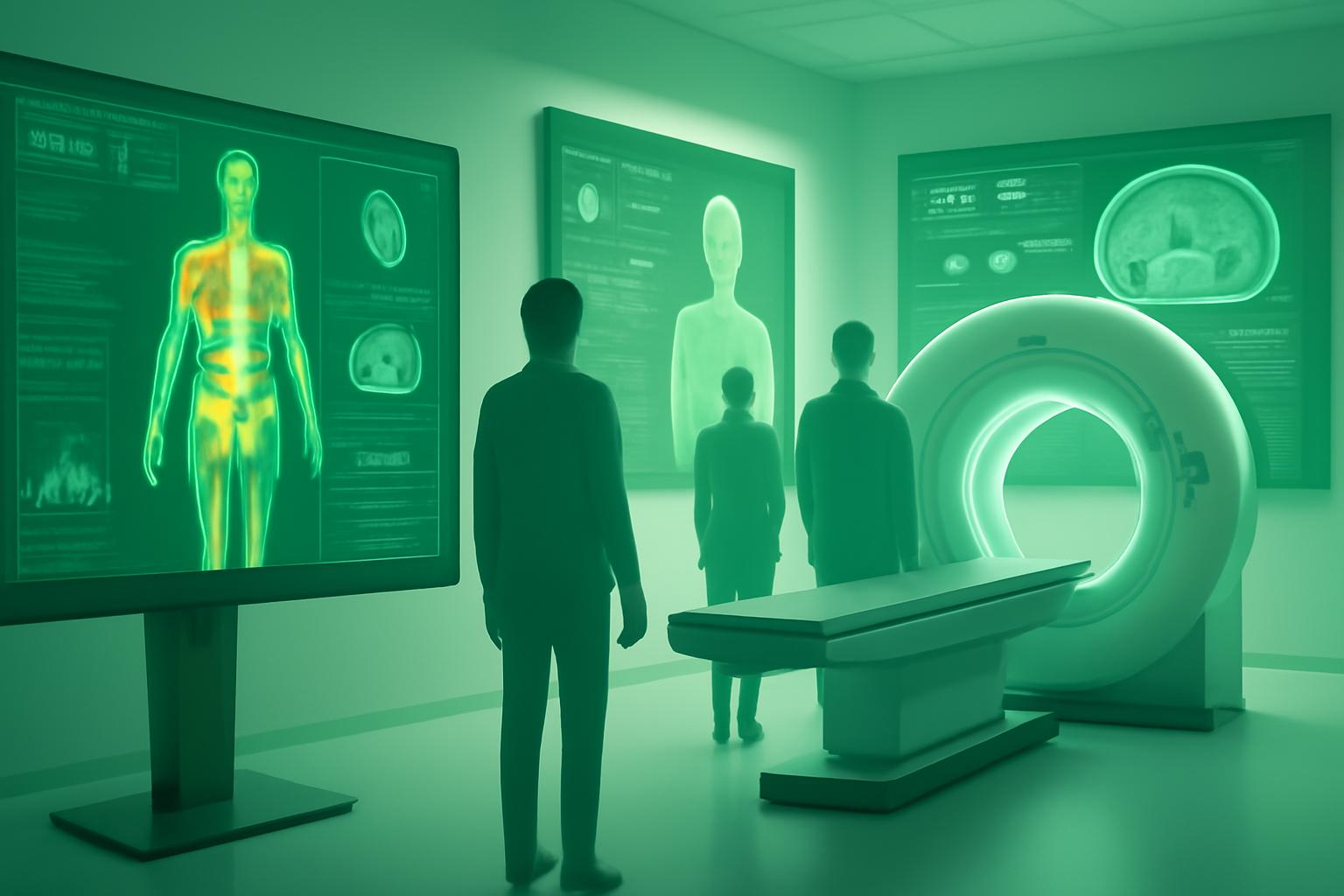
AI-Powered Imaging: RADiCAIT’s Innovation in Diagnostic Accessibility
Positron Emission Tomography (PET) scans are critical tools in cancer detection and monitoring, yet the process remains cumbersome and often inaccessible to many patients, particularly those in rural areas. RADiCAIT, an Oxford University spinout, is addressing this challenge by harnessing artificial intelligence to generate PET-equivalent images from standard CT scans, which are more widely available and cost-effective.
Challenges of Traditional PET Scanning
PET scans require patients to fast for several hours, undergo radioactive tracer injections, and remain still for extended periods during imaging. Additionally, patients must avoid contact with vulnerable populations post-scan due to residual radioactivity. The scarcity of PET scanners, especially outside major urban centers, is compounded by the logistical constraints of producing and transporting short-lived radioactive tracers.
RADiCAIT’s AI-Driven Solution
RADiCAIT’s core innovation is a generative deep neural network developed at the University of Oxford. This model learns to translate CT scan data—anatomical structure—into PET-like physiological imaging by analyzing paired CT and PET scans to identify clinically relevant patterns. This approach enables the generation of synthetic PET images that maintain diagnostic integrity without the need for radioactive tracers.
“We took the most constrained, complex, and costly medical imaging solution and supplanted it with the most accessible, simple, and affordable,” said Sean Walsh, RADiCAIT’s CEO.
The system combines multiple AI models to produce final images for clinical review, drawing parallels with DeepMind’s AlphaFold in terms of translating one type of biological information into another.
Clinical Validation and Trials
RADiCAIT has demonstrated through clinical pilots that their AI-generated PET images are statistically indistinguishable from conventional chemical PET scans. These pilots, conducted in collaboration with leading institutions such as Mass General Brigham and UCSF Health, primarily focus on lung cancer diagnostics. The company is currently undertaking an FDA clinical trial to further validate the technology’s safety and efficacy, supported by a $5 million funding round. Future plans include expanding clinical pilots to colorectal and lymphoma cancers.
“Our trials show that the same quality of clinical decisions can be made using our AI-generated PET as with traditional PET scans,” said Walsh.
Market Potential and Broader Implications
RADiCAIT’s technology addresses a critical bottleneck: the limited availability of PET scanners and radioactive tracers, particularly for diagnostic and monitoring purposes. By enabling synthetic PET imaging from CT scans, the startup seeks to alleviate demand on existing PET infrastructure, reserving it for specialized therapeutic applications. The approach also highlights the expanding role of AI in medical imaging, with potential applications beyond oncology, including materials science and other interdisciplinary fields where hidden natural relationships can be decoded.
FinOracleAI — Market View
RADiCAIT’s AI-driven imaging innovation presents a transformative opportunity in medical diagnostics by reducing cost and increasing accessibility to PET-quality imaging. The company’s strong academic foundation, initial clinical validation, and strategic partnerships position it well for commercial success pending regulatory approvals.
- Opportunities: Expansion of diagnostic imaging access to underserved regions; cost reduction in cancer diagnostics; potential for cross-disciplinary AI applications in medical imaging.
- Risks: Regulatory hurdles in FDA approval; clinical adoption challenges; competition from established imaging technologies and emerging AI startups.
- Market Impact: Could disrupt traditional PET scan market by shifting demand towards synthetic imaging solutions.
Impact: RADiCAIT’s technology is poised to significantly enhance diagnostic imaging accessibility and affordability, potentially setting a new standard in oncology diagnostics and beyond.